Agent does what agents do
agency is just a loop towards a goal — so make your agents show their workings out, and own the context you're paying for.
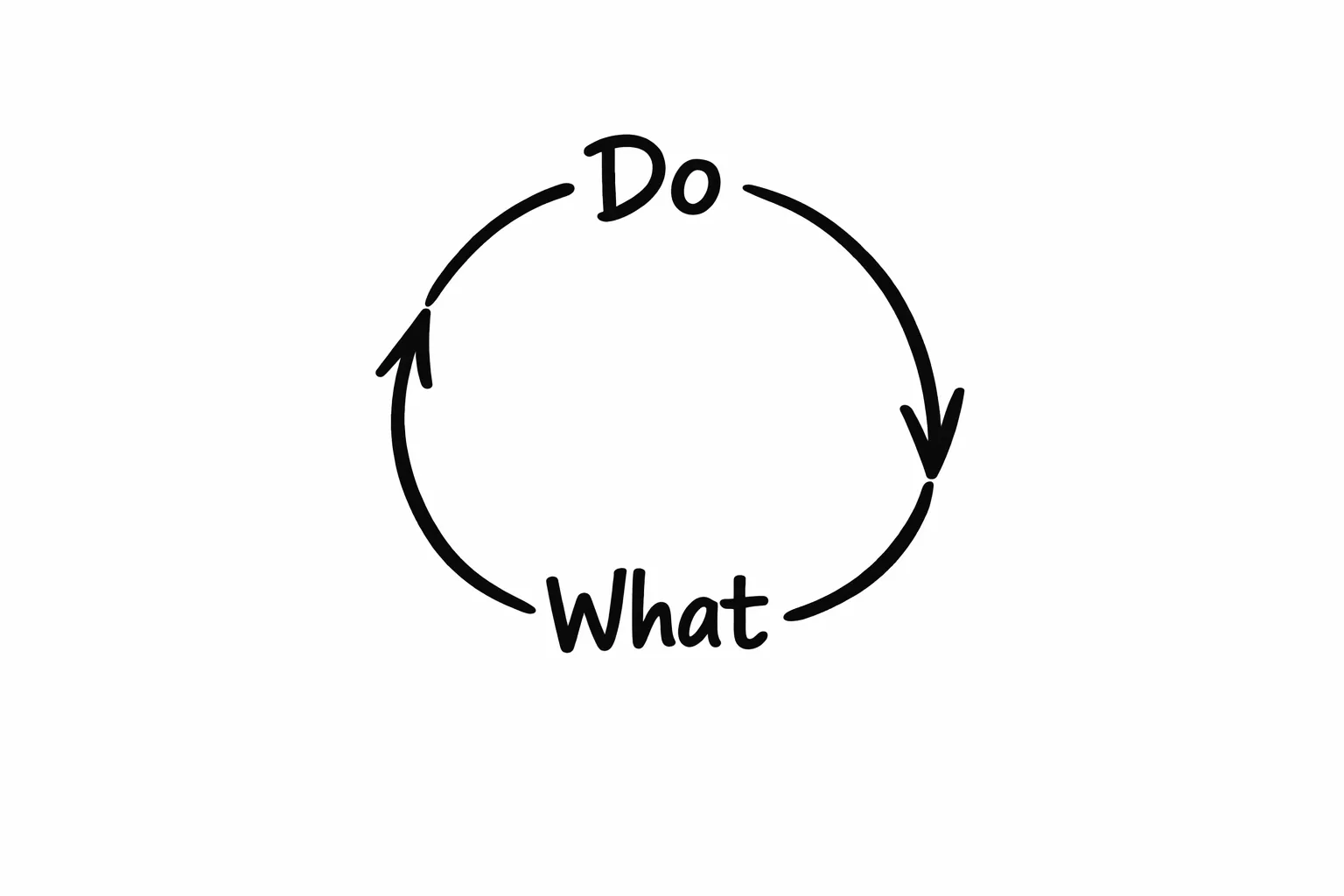
I often wonder if people truly understand the meaning of agency. I believe the advent of ChatGPT back in 2022 reignited our yearning for chat bots, but exposed majority of people to linear AI that’s simply turn-by-turn.
When I explain agents (really, agency) to non-techs, I help them relate to how we work as humans: we’re trying to achieve a goal. The goal can be ambigous, it could be well defined, it could be anything, and it can mutate as we progress on our way towards the “goal”. If we break this down, really our thought process is quite simple:
flowchart TD
    A{Goal achieved?} -->|No| B[Do task]
    A -->|Yes| D[Completed]
    B --> C[Collect output]
    C --> A
Of course, this is very simplified, but the premise stands the same: one continues on their quest until their quest is over.
Sidequests will always creep up, and this is why I prefer to talk about the agency rather than the agents.
Now that we’re seeing the commoditisation of agents through tools like Claude Desktop, etc…, people are still unsure how to use the actual useful part which is the Cowork part of these tools.
You can go do your research, there’s many other offerings out there, but it’s really important to understand why, in the context of Claude Desktop at least, chat is far less superiour than Cowork.
(Now chat def has its uses, quick and dirty firing etc…)
What Anthropic got really right with Cowork was the provisioning of simple tools that allow state to be written to the machine. This opens up massive possibilities and it’s very easy to use it to write your Word, Excel, PowerPoint docs, etc… but even then you’re not taking the full advantage of the power of state management.
Consider this: during maths lessons at school we were always penalised for not showing our workings out. We should penalise the agency if they don’t cite their sources, explain their thinking, etc…, because if they don’t, we’re being sloppy by accepting their slop.
Why this is really important is when we’re thinking about our agents in the form of an agency, there can be many of them, doing same, similar, or totally different tasks. Many can be in parallel, in series, or in waterfall. All with a common final goal, that can iterate over turns. Very quickly (or slowly) one’s tasks can accumulate a lot of misinformation, could derail from the planned goal, or sprawl to provide little value.
Checkpointing is a great approach to own the progress your agency is running.
This is even more important when one considers that it’s bloody hard to extract YOUR context out of black-boxed tools such as ChatGPT and Claude Desktop apps. You’re paying for this AI, you should really own its output. Compunded by the loops this agency runs, it’s even more important you have that data so you can cite it, audit it, fork off it, whenever you want.
When we’re building these production systems we capture all this as OTEL, but when we’re using tools and solutions, never expect them to give you access to the goodies, so you gotta figure that out yourself.
Anyway, if you’re playing with Cowork, I strongly suggest you use a system prompt like this to capture all this magic context.
“As we’re working, make sure there’s a scratch folder, and in that scratch folder write checkpoint files that contain your thinking, citations, paraphrases from source you’re citing, and iterations of our conversation towards the goal; basically your workings out”
And of course, peoples’ requirements are all different, so do what you want with this. Or not. Whatever.